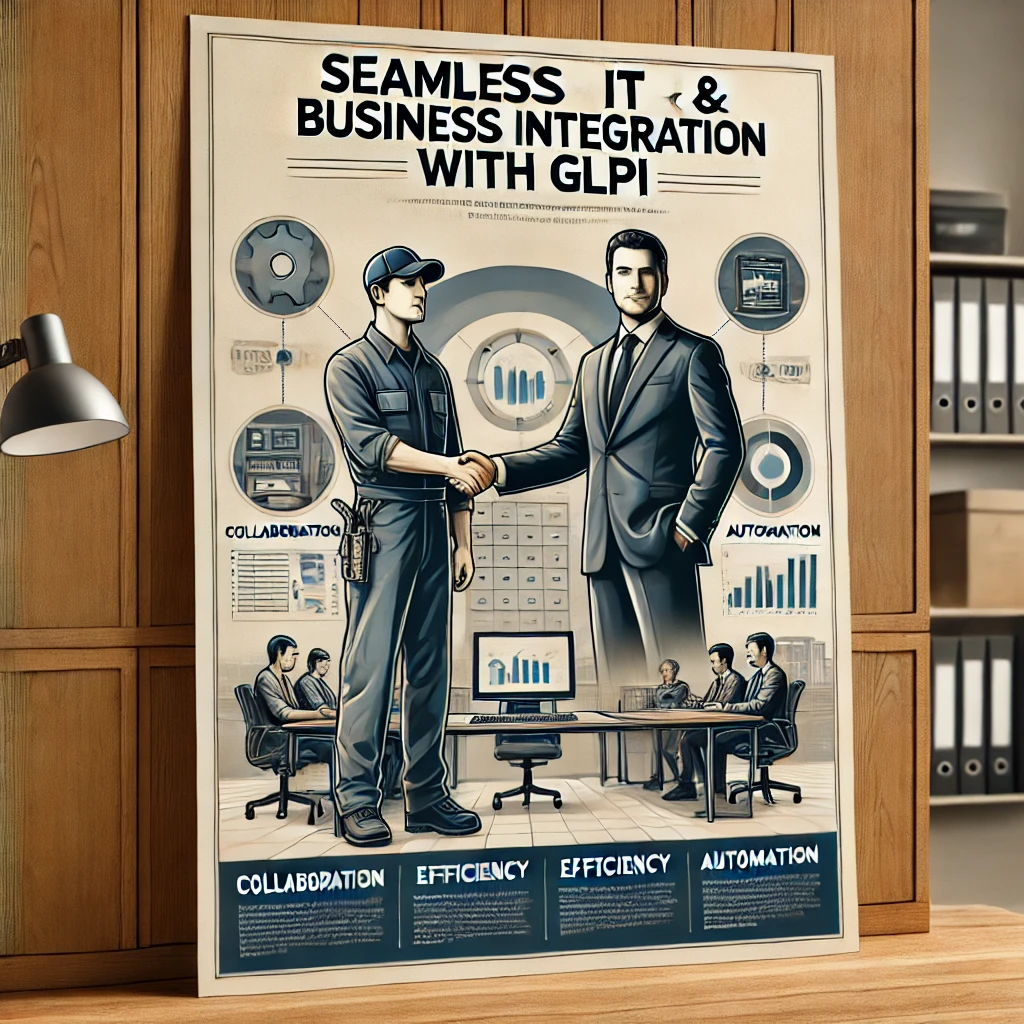
GLPI is usually deployed as an IT helpdesk and asset management tool. But the platform supports ticketing, approvals, and task tracking for any internal process -- not just IT. Some organizations take advantage of this and run facility management, HR requests, or internal procurement through GLPI as well.
Where GLPI works outside IT
Facility management
Requests for HVAC repairs, light bulb replacements, furniture moves, access card checks. The same ticket categories, SLA rules, and assignment rules that work for IT work for building management too. The facility manager sees their own queue, reports show resolution times, and escalations work the same way.
HR onboarding
Onboarding a new employee requires coordination between HR, IT, facilities, and the hiring manager. In GLPI you can create a "New employee onboarding" ticket with subtasks: workspace setup (facilities), account creation (IT), access card (security), training (HR). Each team sees their task, the manager sees overall progress.
Internal procurement
A request for a new monitor, software license, or office supplies. The employee submits a request through the portal, an approval workflow routes it to the manager for sign-off, and after approval it goes to the procurement department. GLPI tracks the status from request to delivery.
How to set it up
GLPI uses entities to separate organizational units. The same mechanism works to separate process areas:
- IT entity -- standard helpdesk, asset management, SLA
- Facility entity -- maintenance requests, building management
- HR entity -- onboarding, employee requests
Each entity has its own categories, templates, and assignment rules. On the self-service portal, the user sees a single interface -- they pick the request type and the system routes it to the correct entity.
Benefits and risks
The benefit: one system for all internal requests. Users learn one interface. Reports are in one place. Licensing costs are zero (GLPI is open source).
The risk: GLPI is not a specialized HR system or a facility management platform. It lacks features that dedicated tools have -- such as attendance tracking, space planning, or lease management. If a process needs specialized functionality, GLPI will not replace it.
The rule of thumb: if a process works on the basis of "someone needs something, someone else handles it, we track the status," GLPI is enough. If the process requires specialized logic (payroll, accounting, CAD), it does not belong in GLPI.
A well-connected IT system is the backbone of a successful organization. With GLPI and IT365, you can eliminate inefficiencies, automate IT processes, and ensure seamless integration between IT and business operations.